Avenue.

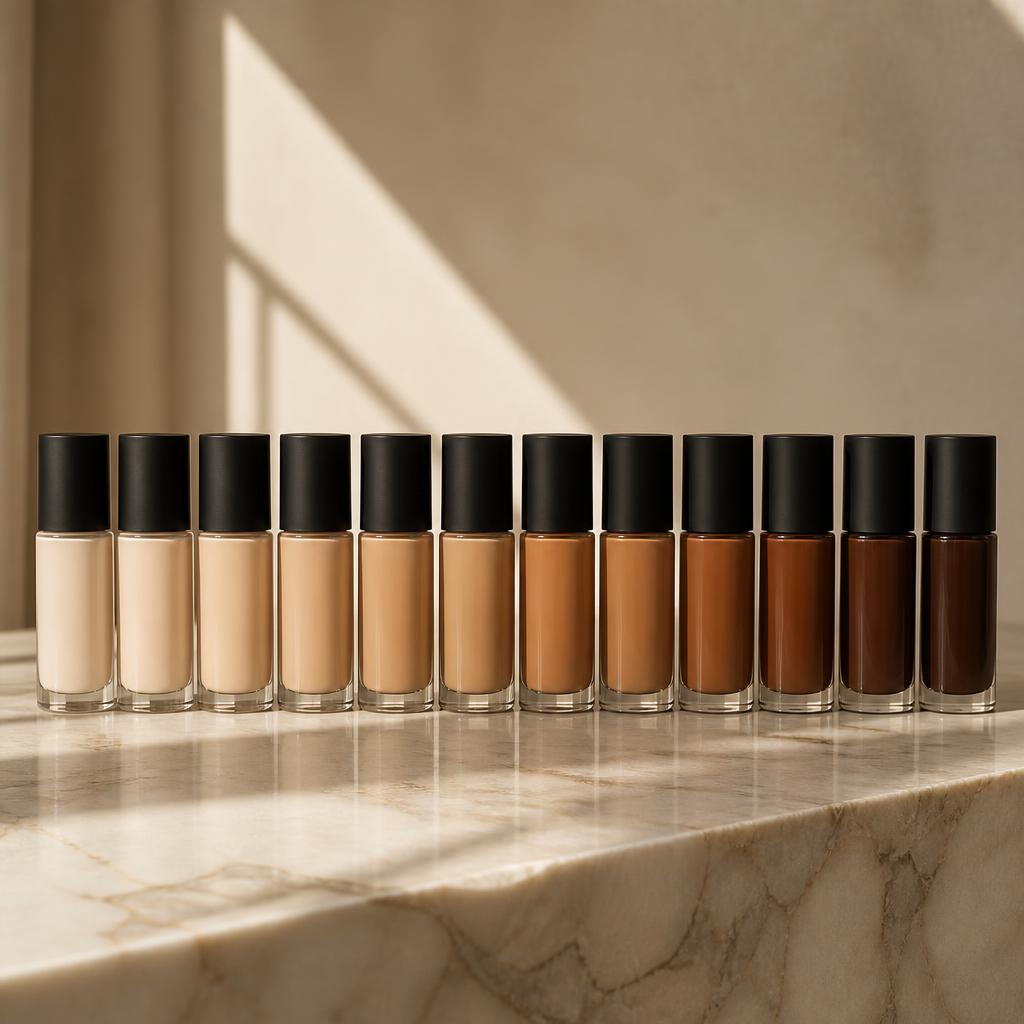
A row of twelve unbranded glass foundation bottles in a gradient of shades from very fair to deep espresso, arranged on a cream marble surface in soft directional light for Avenue. CosmeticsCosmetics

The 40-Shade Standard: How Foundation Ranges Finally Grew Up

By Priya Raman · Avenue. Global Edition

· 8 min read

A decade after Fenty Beauty forced the industry's hand, the 40-shade foundation range has become the minimum entry ticket. Here is what the shift actually cost, and who it still leaves behind.

In September 2017, a single product launch quietly rewrote the rules of the global cosmetics industry. Fenty Beauty's Pro Filt'r foundation shipped with forty shades on day one, and the deepest of them sold out within a week. The industry response was almost comically defensive at first — established brands insisted the demand did not exist, that inventory management would be impossible, that a forty-shade range was a marketing gimmick rather than a customer need. Nine years later, the forty-shade range is the minimum entry ticket for any serious foundation launch, and most of the brands that resisted the shift are no longer relevant in the category. The change did not happen because the industry became more ethical. It happened because it became more profitable. Once the customer had seen a range built for her, she was no longer willing to spend money on ranges that treated her as an afterthought. Deep-shade foundations, once dismissed as a slow-moving inventory problem, turned out to be some of the fastest-moving SKUs in the category. Brands that failed to expand their offerings watched their market share migrate. But the forty-shade standard is not the end of the story. It is closer to the beginning. Skin is not only a color. It is an undertone — the cool, warm, or neutral pigment beneath the surface — and it is a set of behaviors: how it produces oil, how it responds to humidity, how it interacts with sun exposure. The foundations that will define the next decade are the ones that treat all three dimensions as equally important. The most sophisticated brands are already there. Ranges are now organized not just by depth but by undertone, with olive, red, and neutral variants at each shade level. Formulations are being differentiated by skin behavior, so that the same shade might be available in a matte version for oily skin, a hydrating version for dry skin, and a satin version for the majority of customers who fall in between. At-home diagnostic tools — apps that use the phone camera to analyze skin under standardized light — are increasingly guiding customers to the right variant. The corners of the market that remain under-served are worth naming. Very deep skin with cool undertones is still the shade most likely to be missing from a supposedly complete range. Very fair skin with olive undertones — common in Mediterranean, Central Asian, and East Asian populations — is often forced to choose between shades that read pink or yellow rather than the neutral-olive that actually matches. Mature skin at every depth still receives less R&D attention than younger skin, and the formulas designed for it lag behind. The most useful thing an educated customer can do today is to test in daylight rather than under store lighting, to blend a sample down the jawline rather than on the back of the hand, and to accept that most people need two shades rather than one — a slightly deeper shade for the warmer months, and a slightly lighter one for winter. The single-shade year-round foundation is a marketing myth. Skin changes with the seasons, and the routine should change with it. The forty-shade standard was a floor, not a ceiling. The brands that will lead the next decade are the ones that treat every customer walking into their store as deserving of a foundation that actually fits — and that quietly retire the assumption that a category built around the appearance of skin can be organized around anything less than the full range of skin that exists.

About the author

Priya Raman is Avenue.'s global beauty editor, reporting from Mumbai, London, and New York.

About this story: A decade after Fenty Beauty forced the industry's hand, the 40-shade foundation range has become the minimum entry ticket. Here is what the shift actually cost, and who it still leaves behind.

More in Cosmetics

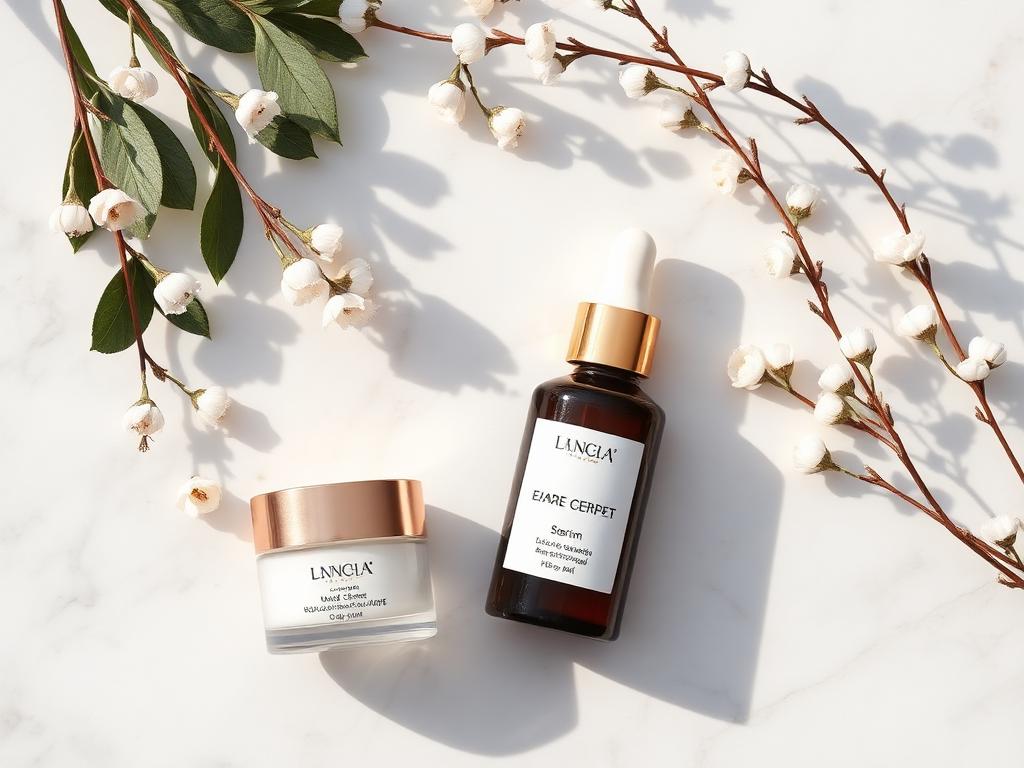
Flat-lay of dermatologist-approved skincare products — cleanser, moisturizer, and SPF — arranged on a white marble vanity for Avenue. CosmeticsCosmetics

Essential Skincare Rituals for Every Identity

A dermatologist-backed guide to building a routine that respects changing skin.

Skin changes. Hormones, climate, stress, sleep, and time all rewrite the map, and the routine that worked at twenty-two will rarely serve the same person at thirty-eight. The best skincare routine is not the one with the most steps or the most expensive labels. It is the one that respects where you are today, and adjusts honestly when that changes. Across Avenue.'s global desks, we asked more than a dozen board-certified dermatologists — in Seoul, Paris, Lagos, Mexico City, Mumbai, and New York — what a genuinely universal foundation looks like. Their answers converged on three products: a gentle, low-pH cleanser used morning and night; a barrier-supporting moisturizer built around ceramides, cholesterol, and fatty acids; and a broad-spectrum sunscreen of at least SPF 30, worn every day the sun is up, regardless of weather or complexion. Everything else is optional. From that foundation, the ritual becomes personal. Retinoids remain the most studied active ingredient in cosmetic dermatology, with decades of evidence for texture, tone, and long-term collagen support. They are also the most misused. Start at the lowest tolerated strength, apply to dry skin, use two nights a week for the first month, and buffer with moisturizer if irritation appears. Consistency beats intensity every time. For tone, azelaic acid has quietly become the ingredient dermatologists reach for first. It addresses post-inflammatory hyperpigmentation on deeper skin tones without the bleaching risk of hydroquinone, calms rosacea and adult acne, and layers politely with almost everything else in a routine. Vitamin C, in the form of L-ascorbic acid at fifteen to twenty percent, remains the best morning antioxidant for anyone whose skin tolerates it. Hormonal transitions deserve their own paragraph. Pregnancy, perimenopause, gender-affirming hormone therapy, and post-partum recovery all shift skin behavior in ways that require the routine to adapt rather than escalate. Trans women beginning estrogen often experience drier, thinner skin and should lean into barrier repair. Trans men beginning testosterone often see increased sebum and acne, and benefit from adding a low-strength salicylic acid cleanser. Perimenopausal skin loses elasticity and hydration together; a peptide serum layered under an occlusive night cream helps. The ritual matters as much as the products. Two minutes of quiet attention twice a day — hands clean, water lukewarm, movements gentle — trains a nervous system that is otherwise starved of small kindnesses. This is skincare as self-respect, not transformation. The face in the mirror is not a problem to be solved. It is a life being lived, and the products worth using are the ones that help you live it more comfortably in your own skin.
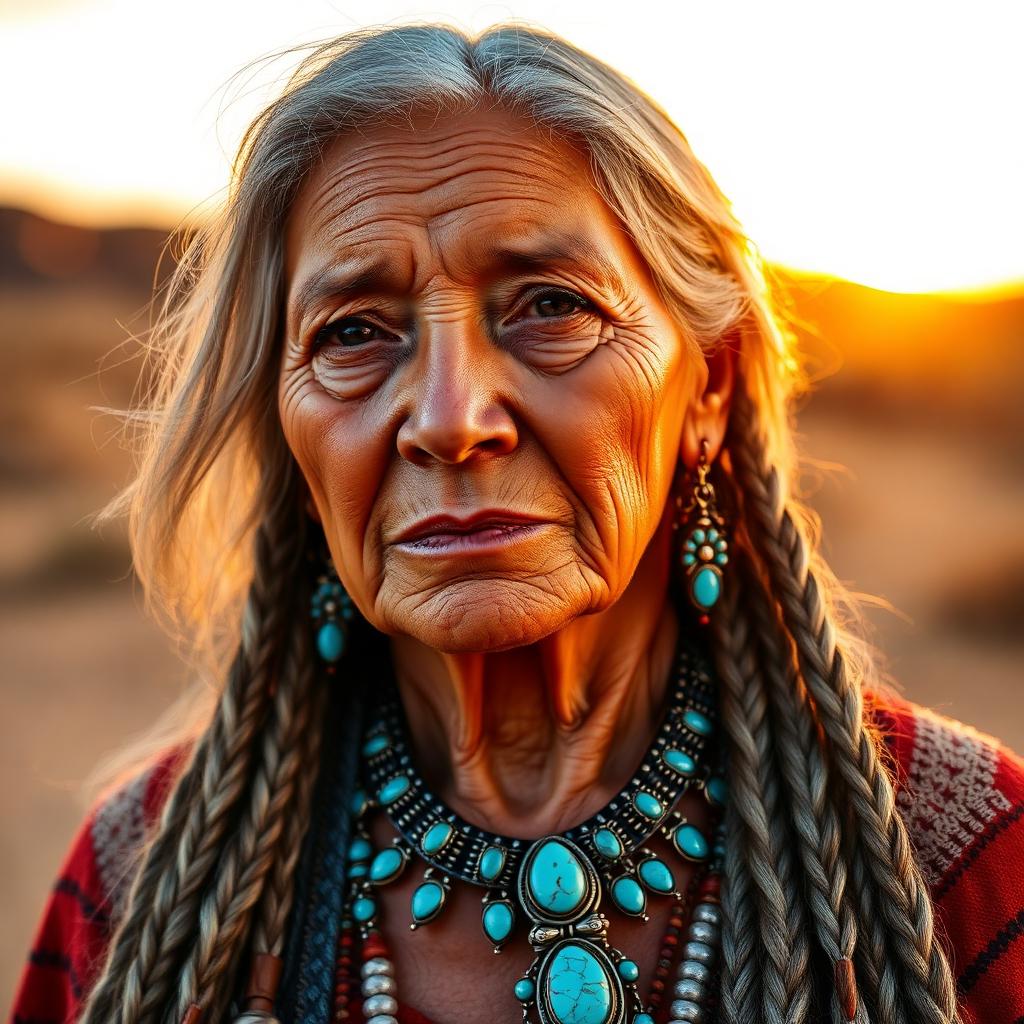
Dignified portrait of an Indigenous Navajo elder with long silver braided hair and traditional turquoise and silver jewelry at desert sunset in New Mexico for Avenue. CosmeticsCosmetics

The Wisdom of Elders: What Indigenous Beauty Traditions Are Teaching the Industry

From the Navajo Nation to the Andes to the Australian outback, beauty rituals refined over centuries are quietly reshaping the modern cosmetics counter.

The global beauty industry is worth more than half a trillion dollars and most of its founding innovations are between fifty and a hundred years old. Indigenous beauty traditions, by contrast, have been refined over millennia. It is taking the industry an embarrassingly long time to notice the asymmetry, but a correction is finally underway. In the Navajo Nation in the American Southwest, elders are leading workshops on the use of yucca root as a cleanser, juniper ash as a skin treatment, and sage as a fragrance. These are not folk remedies. They are formulations that have been tested, adjusted, and passed down for generations in conditions — high altitude, intense sun, extreme temperature swings — that would punish most modern products. Cosmetic chemists from major laboratories now travel to reservations to learn what generations of women have always known. In the Andes, the maca root and quinoa-based skincare that has been part of Quechua beauty practice for centuries is now the foundation of a growing category of high-performance serums. In Australia, the Kakadu plum — used by Aboriginal communities for skin and wound care for tens of thousands of years — has the highest known concentration of vitamin C of any fruit on Earth, and is now an ingredient in serums sold at Bergdorf Goodman. In Morocco, the argan cooperatives that produce the oil have become a model for how Indigenous beauty knowledge can generate income for the women who hold it, rather than being extracted for someone else's profit. The ethical questions are real and unresolved. For most of the industry's history, Indigenous knowledge was treated as a free input — taken, repackaged, and sold back at a markup. The companies doing this right today work in partnership with the communities whose traditions they draw from, share royalties, and credit the source on the label. The companies still doing it the old way are increasingly being called out by a customer base that cares. What the elders are offering the industry is more than ingredients. It is a philosophy: that beauty is connected to land, to lineage, and to the long view of what a body needs to thrive. In a market saturated with twelve-step routines and miracle-of-the-month launches, that philosophy is starting to sound less like tradition and more like the future.